English
 Español
 Русский
 Français
Complete Guide To Fully Welded Ball Valve Manufacturing Process
Industrial pipelines require reliable flow control components to prevent hazardous leaks. A fully welded ball valve offers an ideal solution by eliminating bolted body joints. This technical overview examines how the integral welding process shapes these valves and ensures long-term operational safety in high-pressure environments.
Core Mechanics of the Integral Welding Process
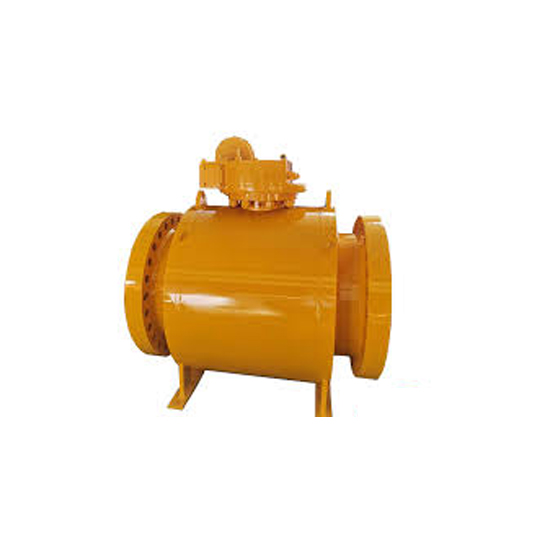
A true all welded ball valve relies on a continuous welding process to fuse the body components into a single structure. Manufacturers use automated submerged arc welding or laser welding systems to join the forged steel housing. This technique distributes mechanical stress evenly across the valve body under high pressure.
Definition of Integral Structural Integrity
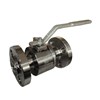
A fully welded ball valve is a pipeline flow control device featuring a body completely fused by automated welding, eliminating external flanged or bolted joints to create a leak-proof casing suitable for underground and high-pressure service.
Three processing stages in the manufacturing process
Reliable production requires strict adherence to precise machining and thermal protocols to maintain structural balance.
1. Forging and Shaping
High-grade carbon steel or stainless steel undergoes precision forging to form the valve hemispherical shells. Forging eliminates internal voids and improves grain structure, allowing the metal to handle extreme pressure variations between 20 and 100 bar.
2. Automated Precision Welding
The separate forged components move to multi-pass welding stations. Fully welded ball valve manufacturers utilize robotic arms to maintain exact speed and temperature controls, preventing thermal distortion near the critical internal valve seats.
3. Post-Weld Non-Destructive Testing
Every unit must pass rigorous quality inspections before deployment. Technicians use ultrasonic testing and radiographic imaging to confirm zero porosity inside the weld seams, ensuring the structural integrity meets international pipeline standards.
Technical Specifications and Performance Data
The table below outlines standard operational parameters for welded pipeline valves across common industrial configurations.
| Nominal Diameter (DN) | Pressure Rating (PN) | Working Temperature Range | Shell Test Pressure |
|---|---|---|---|
| 50 mm to 300 mm | 16 to 40 bar | -29 to 200 degrees Celsius | Up to 60 bar |
| 350 mm to 600 mm | 64 to 100 bar | -46 to 150 degrees Celsius | Up to 150 bar |
Practical Advantages for Industrial Distribution
Sourcing from specialized fully welded ball valve suppliers ensures operators receive components designed for specific long-term benefits.
-
Zero external leakage paths reduce environmental compliance risks.
-
Lightweight compact profiles lower heavy machinery handling costs during field installation.
-
Maintenance-free designs eliminate the need for regular bolt tightening.
Selecting the correct structural configuration remains vital for long-term pipeline safety. Utilizing an integrated welded structure resolves critical leakage vulnerabilities, helping engineering teams maximize transport efficiency and protect industrial assets across extensive distribution networks.